Areas of Expertise
Celiac Disease and Malabsorption
In celiac disease and other malabsorption problems, nutrients cannot pass from the small intestine into the body well enough. These conditions may show up as digestive complaints, or indirectly as anemia, tiredness or weak bones. With the right diagnosis, suitable nutrition and regular follow-up, most cases can be managed well.
01
Celiac disease
Celiac disease is an autoimmune condition in which gluten damages the lining of the small intestine and can impair absorption.
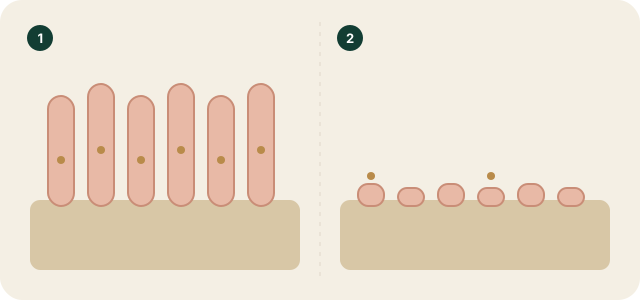
In celiac disease, gluten, a protein found in wheat, barley and rye, triggers the immune system in people with a genetic predisposition. In a healthy gut, finger-like projections called villi greatly widen the surface available for absorption. In celiac disease the villi shrink and flatten. Because the surface becomes smaller, iron, calcium, vitamins and other nutrients cannot be absorbed well enough.
Symptoms
- Bloating, gas and recurring abdominal pain
- Diarrhea; sometimes constipation or fatty, foul-smelling stools
- Persistent tiredness, weakness and getting worn out easily
- Iron deficiency anemia with no other clear cause
- An itchy, blistering skin rash or recurrent mouth sores
- Slow growth or poor weight gain in children
When to see a doctor
- You have had diarrhea, bloating or abdominal pain for weeks or months
- Iron deficiency or anemia has been found without a clear cause
- A first-degree relative has been diagnosed with celiac disease
- You have type 1 diabetes or autoimmune thyroid disease together with digestive complaints
- Your child’s height and weight are falling behind those of peers
How is it diagnosed?
Diagnosis usually starts with a blood test: a tissue transglutaminase IgA antibody and total IgA. When needed, it is confirmed with a small intestine biopsy. Some children can be diagnosed without a biopsy; the physician decides this. Tests must be done while still eating gluten. Starting a gluten-free diet before diagnosis can make results look falsely normal. For this reason, do not go on a gluten-free diet on your own before a diagnosis is made.
Treatment and lifestyle
- Treatment is a strict gluten-free diet kept for life
- A dietitian helps you recognize hidden sources of gluten
- Reading food labels and avoiding cross-contamination are important
- Iron, B12, vitamin D and calcium status are checked regularly
- Bone health is assessed when needed; weak bones can occur in celiac disease
- Screening of first-degree relatives is advised; thyroid and diabetes are also monitored
LifestyleBalanced eating built on naturally gluten-free foods, enough sleep and regular activity support overall well-being.
02
Non-celiac gluten sensitivity
This is a condition in which symptoms follow gluten-containing foods although celiac disease and wheat allergy are not present.
In this condition a person feels unwell after gluten-containing foods, but does not have celiac disease or wheat allergy. The small intestine does not show villus damage as in celiac disease. The mechanism is not fully understood. Components of wheat other than gluten, such as fermentable carbohydrates, may also play a role. Symptoms may begin hours or days after eating gluten. The diagnosis is made by excluding other conditions.
Symptoms
- Bloating, gas and abdominal pain after meals
- Diarrhea, constipation or an alternation of the two
- Headache and a feeling of mental fog
- Tiredness and low energy that affects daily life
- A general feeling of muscle and joint aches
When to see a doctor
- Your symptoms keep returning after gluten-containing foods
- You are thinking of starting a gluten-free diet on your own; seek advice first
- Warning signs such as weight loss, anemia or bloody stools are present
- There is a history of celiac disease in your family
How is it diagnosed?
First, celiac disease is excluded with celiac serology and, when needed, a biopsy, and wheat allergy is excluded as well. These tests must be done while still eating gluten. Then gluten is removed and reintroduced in a controlled way to see whether symptoms are linked to it. The process is carried out together with a physician and a dietitian.
Treatment and lifestyle
- Celiac disease is excluded first, then a nutrition plan is made
- The amount of gluten is adjusted with a dietitian according to symptoms
- A diet as strict as in celiac disease may not always be needed
- Keeping a symptom and food diary helps identify triggers
- Similar conditions such as irritable bowel syndrome are assessed by the physician
- The diet is reviewed again over time together with the physician
LifestyleA gluten-free diet is not necessary for people without symptoms, while stress management, sleep and regular meals may help with complaints.
03
Lactose intolerance
Lactose intolerance is a set of digestive symptoms caused by not digesting lactose, the sugar in milk, well enough.
Lactose is the natural sugar in milk and dairy products. The small intestine needs the enzyme lactase to break it down. When this enzyme is low, lactose passes undigested into the large intestine. There it is fermented by bacteria, producing gas and drawing in water. This is not an allergy. The enzyme shortfall can develop with age, and can also follow celiac disease or a past intestinal infection.
Symptoms
- Bloating and gas after dairy products
- Abdominal pain, cramps and rumbling sounds from the gut
- Watery diarrhea or frequent bowel movements
- Nausea or loss of appetite in some people
- Symptoms starting within a few hours of having dairy products
When to see a doctor
- Symptoms recur often and affect daily life
- You have cut out dairy completely on your own
- Weight loss, bloody stools or nighttime diarrhea are also present
- Symptoms continue even after dairy products are stopped
How is it diagnosed?
Diagnosis mostly relies on the history and on watching symptoms when dairy is temporarily removed and then reintroduced. A hydrogen breath test can be used when needed. Because symptoms may come from another condition such as celiac disease, the physician may request further tests.
Treatment and lifestyle
- Tolerance varies between people; many tolerate small amounts
- Having dairy with meals and in small portions can help
- Yogurt, kefir and aged cheeses are often tolerated better
- Lactose-free dairy and lactase supplements can be chosen after talking with a physician
- Check food labels for hidden sources of lactose
- If dairy is reduced, calcium and vitamin D are obtained from other sources
LifestyleFinding your own tolerance rather than cutting out dairy entirely helps keep your nutrition balanced.
04
Malabsorption disorders
In malabsorption disorders, nutrients cannot enter the blood from the gut well enough for various reasons, and deficiencies can develop.
Malabsorption means that some step in digesting or absorbing food is not working properly. Causes include celiac disease, small intestinal bacterial overgrowth, pancreatic insufficiency, Crohn’s disease, some stomach or bowel surgeries and certain infections. As a result, deficiencies of iron, B12, folate, vitamin D and other vitamins and minerals can occur. So it is important to look for the cause, not only the deficiency.
Symptoms
- Long-lasting diarrhea, or fatty, floating, foul-smelling stools
- Unintentional weight loss without any change in diet
- Tiredness, paleness and palpitations from anemia
- Numbness or tingling in hands and feet (with B12 deficiency)
- Bone pain, muscle cramps or easy bruising
- Bloating and gas that worsen after meals
When to see a doctor
- Diarrhea and weight loss last longer than a few weeks
- Low iron, B12 or vitamin D has been found
- Anemia keeps returning or its cause has not been found
- Numbness in hands and feet or balance problems have started
- You have had stomach or bowel surgery and symptoms are new
How is it diagnosed?
Assessment begins with the history and an examination. Blood tests (blood count, ferritin, B12, folate, vitamin D), a celiac test and, when needed, stool tests, endoscopy, breath tests or imaging may be used. The aim is to identify both the deficiency and its underlying cause.
Treatment and lifestyle
- The main treatment is finding and addressing the underlying cause
- Deficiencies are corrected appropriately under a physician’s guidance
- For causes such as bacterial overgrowth, the physician decides on treatment
- Random use of vitamins or supplements is avoided
- A nutrition specialist helps plan enough energy and nutrient intake
- Regular follow-up tests show whether the deficiency is improving
LifestyleStarting long-term restrictive diets before a diagnosis can worsen deficiencies; balanced and varied eating should be the basis.